

When Marcus Rashford hit 35.37 km/h in the Champions League against Newcastle United, it was a snapshot of the physical level he’s been operating at all season.
On that night, he didn’t just clock one of the fastest speeds in the competition. He scored twice, constantly threatened in behind, and showed exactly why his pace remains one of his most dangerous weapons.
But that one sprint doesn’t tell the full story.
The Data Behind His Game
Across the season, Rashford has recorded 23 goal contributions in 35 games.
According to Gradient Sports, his physical output per 90 minutes looks like this:
- Sprint Distance: 350m
- High-Speed Running (HSR): 610m
- Sprints: 23
- Accelerations: 51
- Decelerations: 57
On paper, these are just numbers.
In reality, they describe a forward who is constantly operating at high intensity, repeatedly stretching defenses, and staying involved in the game both on and off the ball.
What Those Metrics Actually Tell Us
Each metric reveals something specific about how Rashford plays:
Sprint Distance (350m)
Repeated high-speed runs in behind – forcing defenders to turn and defend facing their own goal.
High-Speed Running (610m)
Constant movement up and down the pitch: staying involved in both attacking and defensive phases.
23 Sprints per Game
Not just speed, but the ability to repeat it. This is what separates elite players from average ones.
51 Accelerations & 57 Decelerations
The hidden work: sharp movements, pressing, quick changes of direction – the actions that create space and opportunities.
Together, this is not just a fast player.
It’s a player who can repeat high-intensity actions consistently across 90 minutes.
Turning Data into Development
For most players, this is where the gap appears.
You can watch clips.
You can understand the numbers.
But how do you actually train to improve them?
Here’s how Rashford’s physical profile translates into actionable training:
1. Build Repeat Sprint Ability
Rashford’s 23 sprints per game highlight one key trait:
the ability to sprint again and again without dropping off.
Try this:
- 6–10 x 30m sprints
- 20–30 seconds rest between efforts
- Maintain maximum effort on every rep
Focus on consistency — not just your fastest sprint, but your ability to repeat it.
2. Improve Acceleration & Deceleration
Those 50+ accelerations and decelerations are what create separation on the pitch.
Try this:
- 5–10m explosive starts
- Sprint → sharp stop → reset
- Progress into change-of-direction drills
This is what helps you beat players in tight spaces — not just raw top speed.
3. Increase High-Speed Running Capacity
Rashford’s 610m of high-speed running shows constant involvement.
Try this:
- 15–20 second runs at 70–85% effort
- 40–60 seconds recovery
- Repeat 8–12 times
This keeps you active, available, and dangerous throughout the game.
The Problem Most Players Face
Here’s the reality:
Most players don’t know:
- How fast they’re actually running
- How many sprints they’re completing
- Whether they’re improving week to week
So even if you’re training hard…
you’re still guessing.
From Guessing to Measurable Progress
At the elite level, players don’t rely on guesswork – they rely on data.
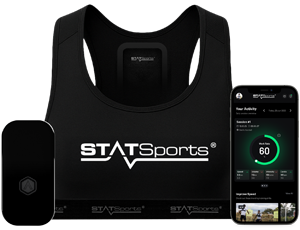
That’s where STATSports Academy changes the game.
With GPS-driven performance tracking, you can:
- Measure your sprint speed and distance
- Track high-speed running and sprint volume
- Monitor accelerations and decelerations
- Benchmark your performance against elite standards
Instead of hoping you’re improving…
you can actually see it, track it, and train with purpose.
What Players Can Take from This
The takeaway isn’t to match Rashford’s top speed.
It’s to understand how elite players use their physical attributes:
- Repeat sprinting is essential at every level
- Acceleration and deceleration create real separation
- High-speed movement keeps you involved in the game
The best players aren’t just fast once.
They’re consistently fast, repeatedly effective, and physically reliable for 90 minutes.
Want to train like the elite?
Start tracking your performance with STATSports Academy and turn your data into development.
Share article