

A coach tells a high school athlete he needs to get fitter for college. He adds a couple of long runs to his week. But if the challenge at the next level is making repeated high-speed efforts, he may be doing more work without spending much time at the speeds he needs to get used to.
STATSports ambassador Harry Kane’s journey is a reminder that athletes develop on different timelines. A comparison with peers tells you where you stand today. Your own progress shows what you’ve built by taking small, consistent steps over time. Wearable GPS tracking gives athletes and coaches a way to see those steps and decide what to work on next.
.
A conversation with a coach helps the athlete decide what to work on next
Team analysis for coaches and individual support for athletes
Coaches use GPS athlete monitoring to review squad workloads, compare training intensity with competition demands and see what each athlete got out of a session. In soccer, rugby or lacrosse, that might mean identifying who had opportunities to run at high speed and who spent most of practice working in tighter spaces.
Athletes have another question when they leave practice. What should I work on next?
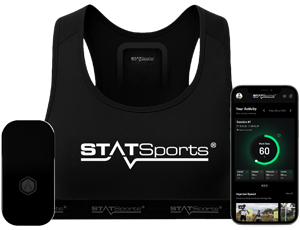
That’s why we built STATSports Academy with individual development in mind. Athletes sync sessions from their wearable GPS performance tracker and review max speed, high-speed running distance, sprint distance, accelerations and decelerations. They can choose a focus with their coach, find drills in the Academy video library, use AI Coach to help build sessions and track progress in the app. That focus can become part of the physical pillar of an individual development plan (IDP).
If you’re comparing GPS trackers for athletes or athlete monitoring systems for teams, ask what happens after the session. Can coaches review the squad’s workload? Can athletes see their own data, find training for their goal and check their progress over time?
Building high-speed running exposure before college
Imagine a winger preparing for her first college soccer preseason. She and her coach use STATSports Player Comparison to see how her match data compares with the NCAA Division I women’s winger benchmark.

STATSports Player Comparison. Match outputs against the NCAA Division I women’s winger reference.
Her max speed was higher at 19.21 mph versus 18.48 mph. Total distance was closer at 5.38 miles versus 6.60 miles. The biggest gap was in high-speed running (HSR), the distance covered above a defined speed threshold. She recorded 446 yards against a reference of 1,065 yards, less than half the benchmark distance.
She can reach the speed, so where can she get more opportunities to run at it? Her coach can look at her playing time, role and team training before they put more regular high-speed running exposure into the physical pillar of her IDP.
Suppose most of her team training that week is in small spaces and she’s played limited minutes. She and her coach could use the Academy video library and AI Coach to plan some HSR exposure drills. If she’s already had plenty of chances to run fast in matches or training, they can leave the extra work out. At her next IDP review, she brings a few weeks of data and talks through when she got that exposure and what she’d change next.

Give athletes a role in their next performance review
Ask the athlete to bring one metric they want to understand better. Agree on a training action and a date to look at it again. At the next check-in, let the athlete lead with what they tried, what changed and what they’d do next. A college benchmark can help them choose a direction. Comparing their latest work with their own starting point helps them see the small gains they’re making on their own timeline. The same process can help a football player build repeat high-speed efforts or a lacrosse player work on acceleration.
To see how STATSports Academy can support what you’re already doing, visit Academy or request a demo for your team.
Share article