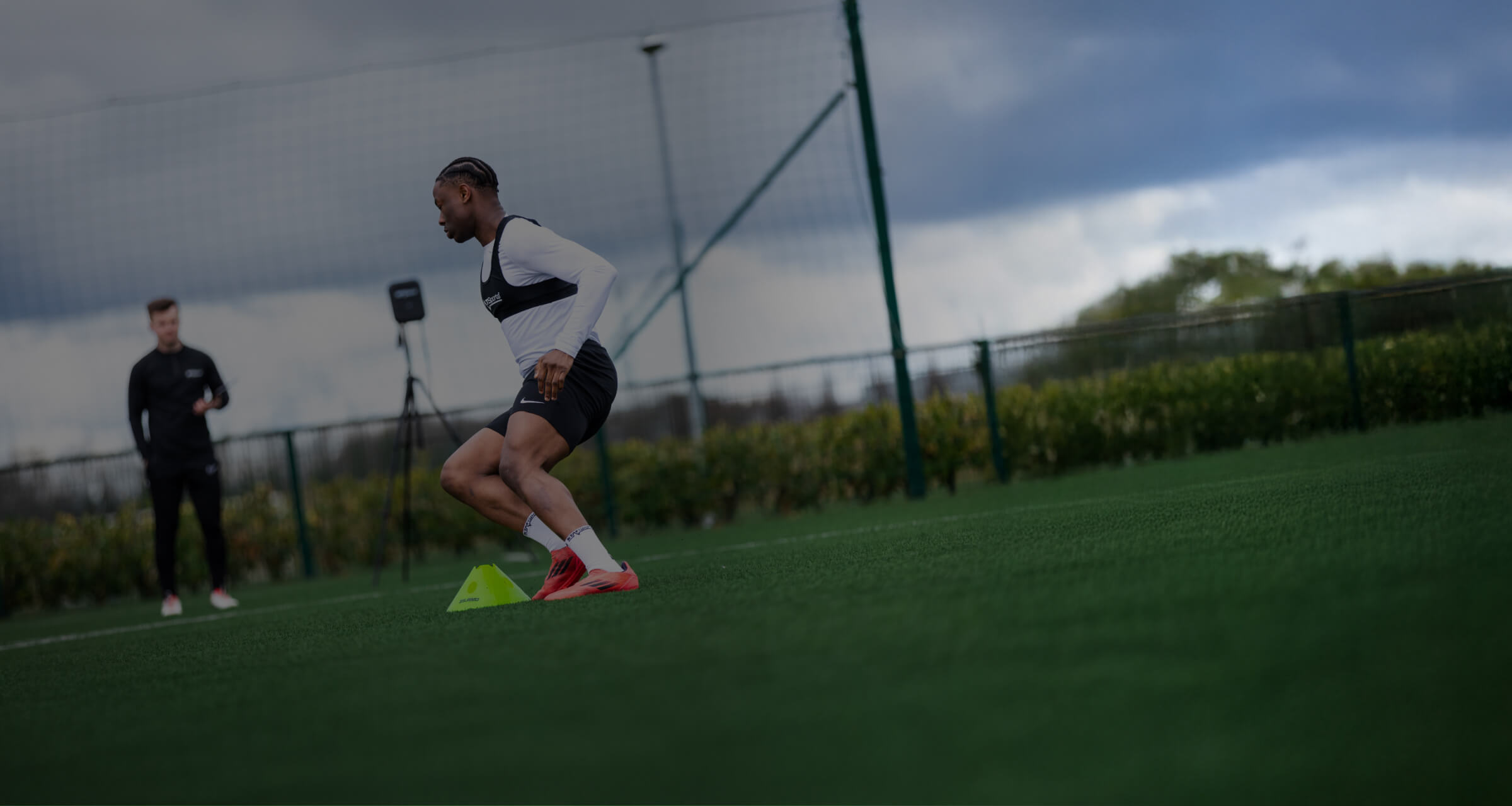
Spending two weeks with Parma Calcio 1913 during pre-season gave me the opportunity to step into an environment that was familiar, but at the same time completely different.
Through my previous experience working as a Sport Scientist within professional football, I already knew what the daily rhythm of working within a football club looks like. Early starts, meetings, training sessions, data collection and processing, and the constant interaction between players, performance, medical and technical staff were not new to me.
This time, however, I experienced that environment from a different perspective.
As an Account Manager at STATSports, I normally work alongside clubs, supporting practitioners with the technology, data and workflows they use every day.
I usually visit clubs for one or two days and return throughout the season, but this time I was able to become fully integrated into Parma Calcio 1913 – an historic Italian club competing in Serie A.
Who would say no to an experience like that?
This was a little different to our typical support model. With STATSports newly introduced at Parma, the timing of pre-season created an opportunity to provide a more bespoke period of support, spending additional time within the environment as the performance staff established how the system could best fit their objectives and existing workflows.
It gave me a unique opportunity to understand the club in greater depth, while helping the staff build a strong foundation for using STATSports throughout the season.
On my first day, I met Sam Wilson, Head of Performance, and Valerio Persichetti, Fitness Coach, at the Mutti Training Centre in Collecchio, just outside Parma.
I received a very warm welcome from both of them, as well as from the wider staff. My Parma kit was already laid out for me, and I was immediately drawn into the daily routine and became part of the group.

Inside an Italian pre-season
Before I arrived, Parma had already started their pre-season two weeks earlier, so I joined right in the middle of the building phase.
My first day immediately included two sessions on the pitch. Having experienced double-session days before, I knew it could be a hectic day where an efficient workflow was important.
At the same time, I was trying to get to know my new colleagues and understand the environment as quickly as possible.
I strongly believe that working together is also about building good relationships. In Dutch, I would say: “Zonder relatie, geen prestatie!” — without a relationship, there is no performance.
During the first few days, I had the opportunity to settle into my role as we spent several sessions at the training centre. We then jumped on a bus to Trento, where we played two friendly matches, using the games to progressively build match minutes for each player as part of the pre-season building phase, before heading to the Dolomites for the pre-season training camp.
During these days, I realised that everyone involved was 100% committed.
Even people working at the training facilities at the training camp location were given Parma kit and included in the wider group. It showed me how everyone who contributed was made to feel part of the team.
That sense of belonging was also reflected in the smaller traditions within the team.
Later that week, another tradition threw me straight into the culture: as a new member of the group, I had to sing a song in front of the entire squad. Behind the GPS data, physical outputs and performance meetings, there is still a group of people building relationships and creating a team culture.
Where Data Meets the Pitch
Being in pre-season, a key focus was preparing the players for the physical demands of the season, while also continuing to develop the tactical and technical aspects of the team’s style of play.
Pre-season also brings another layer of complexity, with players joining, leaving and progressing through different stages of their preparation.
With players starting their pre-season at different points, some completing the full preparation, others joining later from different clubs, returning from the World Cup or progressing through return-to-play, there was a constant need to understand each player’s previous exposure and integrate them into the programme with the demands of the competition in mind.
Not every player is therefore at the same stage physically or mentally, meaning individual training loads and exposure need to be continually adapted alongside the objectives of the team.
What stood out to me was how this individualisation was managed within the collective programme.
There was clear planning behind the sessions, from drill selection to how individual players could be modified depending on their individual needs and the stage of their pre-season build-up.
Within the same session, individual players could have different levels of exposure depending on where they were in their preparation. Some players might do slightly less, others more, while there was also room for individual development within the team session.
The aim was not simply to give everyone the same training, but to progressively build each player towards the demands of competition while keeping them within the collective football work wherever possible.

This was also where the introduction of STATSports became particularly relevant.
As the system was new to Parma, an important part of the pre-season process was educating staff on the different metrics and establishing which measures were most relevant for specific, predetermined training outcomes.
This process was informed by the performance staff’s previous experience and knowledge, starting with the intended outcome of a session and then identifying the most appropriate metrics to evaluate whether that outcome had been achieved. This also highlighted the importance of clear communication between the coaching and performance staff.
The objective isn’t to produce more reports or more data. It’s about identifying what actually matters and communicating it simply enough to support decision-making.
Once those measures and objectives were established, the data became part of the daily workflow, from planning the next session to monitoring what was happening on the pitch and reflecting on the session afterwards.
A few examples of how the data was used during different moments of the day:
Pre-session
Previous outputs and the objectives for the day were relevant for planning upcoming sessions. Weekly loads could be reviewed to visualise progress over time throughout this building phase in pre-season.
During the session
Live data gave the performance staff an immediate view of the intensity of the session and supported decisions around individual exposure.
Post-session
Both absolute and relative data helped to assess whether the intended objectives had been achieved.
Most importantly, the physical data was never considered in isolation. It was interpreted alongside the wider football context, the individual player and the objective of the session.
The numbers could provide insight into the physical demands of a particular session, but the real value came from understanding what those numbers meant in relation to what the coaching staff were trying to achieve on the pitch.
That was one of my biggest takeaways from being embedded within the performance environment. I saw how the process moves from data, to interpretation, to communication and ultimately to decision-making.
Live data did not necessarily dictate what happened on the pitch, but it provided another layer of information to support decisions. For me, that is where the real value of performance data lies – not in producing more numbers, but in identifying what matters and using it within the wider performance strategy.

Seeing the Club from a Different Perspective
Being an Account Manager for the clubs you work with adds so much more value when you can spend an extended period of time with them. You get to understand their vision, see their actual workflows and experience the environment in which the technology is being used.
Most importantly, you build relationships.
In this case, I quickly realised that my thoughts and approach were closely aligned with the performance philosophy within the club. This shared vision made it easy to settle into the environment and gave us a strong foundation to work from in the weeks ahead.
Working closely together with Sam and Valerio, I experienced a strong sense of collaboration, trust and respect for each other’s roles. That made it possible to work as one team, despite each person having their own responsibilities.
This whole experience, and the bond you form with the people you meet at the club, adds an extra dimension to the work we do at STATSports. H
opefully, this is just the beginning of the relationship. Spending two weeks embedded within Parma gave me the opportunity to build relationships with the staff and understand their environment in a much deeper way.
With the STATSports system now also being used across the academy and women’s team, I hope we can continue to build on these relationships and create more opportunities to work closely with clubs in this way.
I genuinely believe that spending extended periods embedded within clubs creates value beyond the technology itself, allowing us to better understand their environment and work together towards the same goal: improving performance.
A special thank you to STATSports and to Sam Wilson for making this experience possible. Being able to spend two weeks embedded within Parma Calcio 1913, experience Italian football from the inside and work alongside such a great group of people is an experience I simply won’t forget.
Author Bio

Author Bio
Tim van der Meulen
Sports Scientist, STATSports
Share article