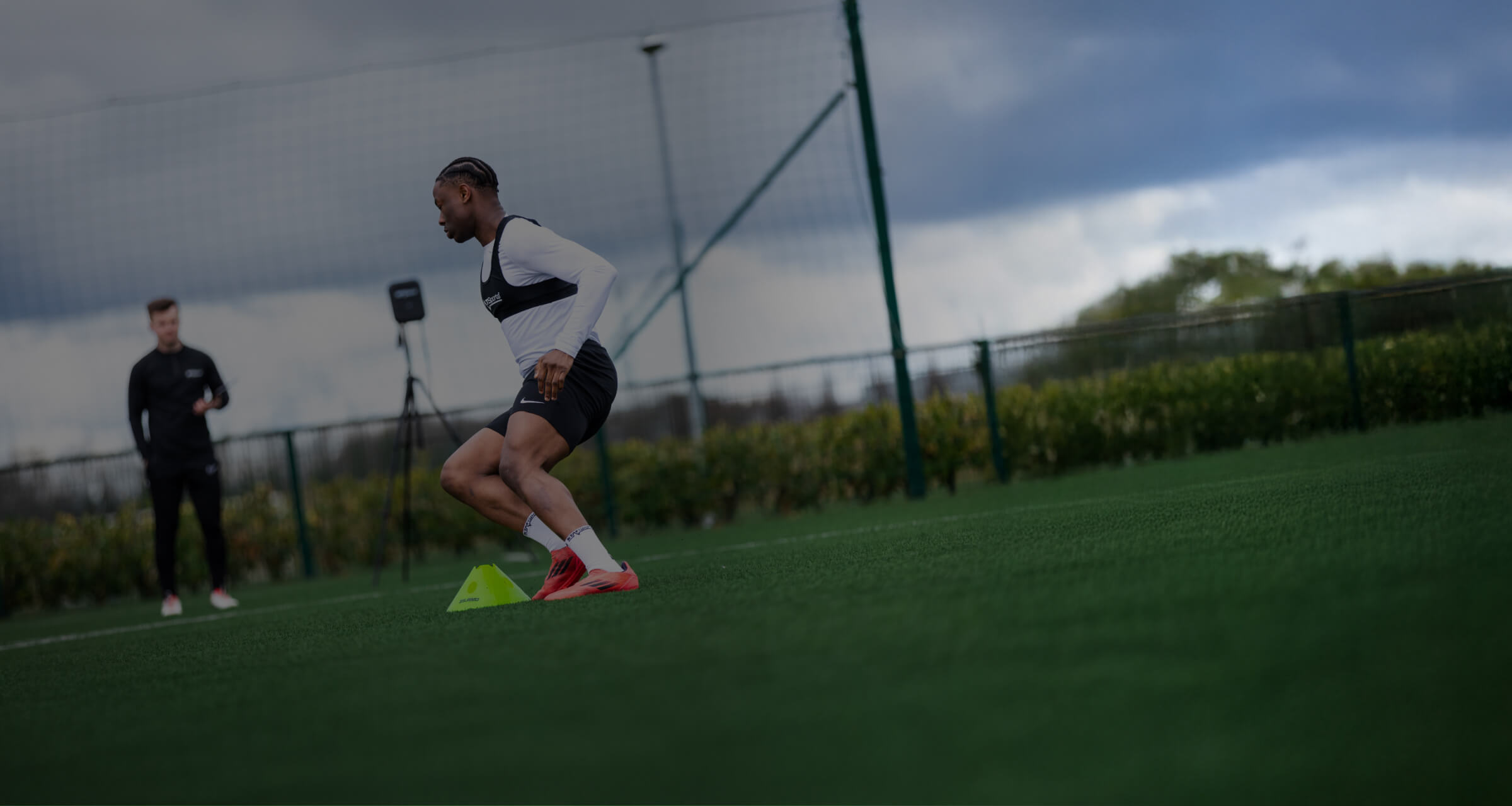
When rules change, physical demands change. The 12 new playing rule enhancements introduced to Ladies Gaelic Football this season were designed to speed up the game and reduce stoppages.
What nobody had yet quantified was what that actually means for the bodies of the players on the pitch – until now. Players are covering over 7000 meters a match, accelerations and decelerations are up and depending on position, the demands are now dramatically different.
Here’s what the match data under the new rules actually shows.
Participants
All participants (n=24) were part of an inter county Division 3 squad in this present study. Data was obtained from players who had completed over 50 minutes per game (n=3), across a league campaign. 5 positions were used to categorise player full back, half back, midfield, half forward, full forward (2).
Analysis
All matches took place between February 2026 and March 2026, where each player wore a GNSS unit (Apex Pod, STATSports, Newry, UK) in a bespoke pocket incorporated into their player jersey on the upper thoracic spine between the scapulae to reduce movement artefacts. Units captured data at 10Hz.
-
- First and second half drills were cut using the Sonra Desktop, with halftime periods excluded from analysis, so that data only described on field player activity.
- All Drills were synced across post match and data was downloaded using STATSports Sonra Software to Microsoft Excel for analysis.
Measures
Player’s movement speeds were classified into the following absolute categories, that are consistent with female athlete research literature in ladies Gaelic Football (4): High Speed Running (> 4.4 m.s), Acceleration (> 3 m.s 2) and Decelerations (> 3 m.s 2) along with Maximal Speed, this approach takes into consideration the individual speed capacities (4).
Results

Figure 1 – Total distance covered (m) between specific positional groups.
The mean distance that was covered was 6468m during matches. With the half forward and the midfield position groups covering the most distance and the full forward line covering the least distance.
High Speed Running

Figure 2 – High speed running distance covered (m) between specific positional groups
Midfield and the Half Forwards covered the highest High Speed Running distances with the Full Forwards and the Full Backs covering lower value for this metric, reflecting typical positional demands.
Accelerations & Decelerations

Figure 3 – Number of accelerations & Decelerations completed between specific positional groups.
All position groups completed more decelerations. Full Forwards and the Half Backs completed the highest number of accelerations and decelerations. This pattern reflects the increased physicality under the new rules placing greater load demands on the body.

Table 1 – Overview of movement patterns and player demands during match – play
The Full Forwards displayed the highest Max Speed and Sprint Values in games compared to all other positions.
Implementing into Daily Practice
The introduction of the new rule enhancements in Ladies Gaelic Football has led to a clear shift in the physical and physiological demands of match play, particularly in relation to high intensity actions.
One of the most notable changes in the increase in accelerations and decelerations (5). This highlights that players are now competing at a higher intensity, with repeated high force efforts placing greater strain on the body (6).
Sports Scientists and Coaches should prioritise repeated high intensity effort ability, alongside structured exposure to acceleration and deceleration demands in training.
Increase in Accelerations and Decelerations


Maximal speed has also increased (3) under the new rules, reflecting a faster style of play and greater transitional opportunities. From an offensive standpoint, players with higher peak speed are more capable of evading defenders and creating scoring opportunities. This reinforces the need for dedicated speed development training, including maximal velocity work within training.
Despite these changes, total distance covered remains relatively similar (2), suggesting that the overall volume of running has not changed substantially, but there is a greater proportion of work now occurring at higher intensities.
High speed running (HSR) profiles appear to be more position specific under the new rules, with increased demands placed on middle third players. This is likely influenced by tactical adaption’s such as the ‘3 up rule’, which alters player involvement. Conversely, lower HSR values observed in full backs and full forwards suggest more positional constraint.
For sport scientists, this emphasises the importance of an individualised approach to load management, ensuring players are exposed to the specific demands relevant to their role.
Thresholds can be used on the STATSports software to track loading of players during training ensuring more accurate monitoring and prescription.

In addition, the use of Max Intensity Periods (MIPs) within the STATSports software can provide practitioners with greater insights into the most demanding passages to play under the new rules.
By identifying the peak periods of HSR across specific time windows, practitioners can better understand the true worst case scenarios experienced by players in different positions. This allows coaches to design training drills that replicate the intensity and duration of these peak passages, ensuring players are physiologically prepared for the demands of competition.

Limitations
The purpose of this study was to present data on Ladies Gaelic Football under the new rule enhancements. Despite the implementation of female specific speed bands/thresholds for HSR, no such practise was used in relation to Acceleration/Deceleration Zones, resulting in a more than likely under estimation of Acceleration/Deceleration activities.
Additionally, the lack of pre rule data within the same cohort, prevents direct comparison of demands before and after the rule changes. As a result, findings rely on comparisons with existing literature, which may differ in sample, competition level, and methodology.
Practical Applications
This study presents the match demands in terms of movement characteristics and workloads performed at Ladies Gaelic Football. Under the new rules, the data reveals distinct positional running profiles that should inform how coaches plan and prepare to replicate match demands. Specifically, the analysis indicates that players in the transitional lines (the half back, midfield, and half forward positions) cover greater distances during matches compared to those inside lines (Full back and full forward) who are involved in more intense, powerful movements.
These findings offer a valuable benchmark for coaches, helping them refine player development strategies to ensure athletes are physically prepared for the demands of match play under the new enhancements.
References:
- Ladies Gaelic Football Association. (2026) Overview Rule Enhancements – Ladies Gaelic Football. Available at: https://ladiesgaelic.ie/wp-content/uploads/2025/12/LGFA-Playing-Rules-Enhancements-Summary.pdf
- Solan, B. (2015) “The Positional Match Running Performance of Elite Gaelic Football,” Journal of Strength and Conditioning Research. Ovid Technologies (Wolters Kluwer Health). doi: 10.1519/JSC.0000000000001309.
- Malone, S., McGuinness, A., Duggan, J.D., Murphy, A., Collins, K. and O’Connor, C., 2023. The running performance of elite ladies Gaelic football with respect to position and halves of play. Sport Sciences for Health, 19(3), pp.959-967.
- Pimenta, R., Antunes, H., Ribeiro, J. and Yuzo Nakamura, F., 2025. Should GPS data be normalized for performance and fatigue monitoring in soccer? A theoretical–practical discussion on sprinting. German Journal of Exercise and Sport Research, pp.1-7.
- McGuinness, E., Lyons, M., Beattie, K., Lane, A., Higginbotham, C. and Healy, R., 2026. The between competition sprint profile of intercounty female gaelic football during training and match-play: An exploratory study. PloS one, 21(2), p.e0340315.
- Kirk, B.J., Trajano, G.S., Pulverenti, T.S., Rowe, G. and Blazevich, A.J., 2019. Neuromuscular factors contributing to reductions in muscle force after repeated, high-intensity muscular efforts. Frontiers in Physiology, 10, p.783.
Author Bio
Author Bio
Eimear Smyth
Sports Scientist, STATSports
Share article