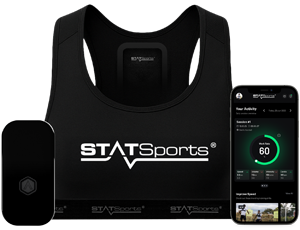


GPS tracking and performance analysis have become an increasingly important component of preparation and development across many field-based sports. Commonly used during both training sessions and competitive matches, GPS devices enable the collection of objective performance data and provide valuable insight into player movement patterns on the pitch. While GPS technology was once reserved for elite athletes, it is now widely used at all levels of sport, with players from under-8 age groups upwards using performance data to identify areas for improvement, support skill development, and enhance overall performance.
STATSports has been the trusted supplier of GPS performance technology to world-class teams for more than 15 years, following the company’s inception in 2008. Its devices are worn by professional athletes across a variety of sports, including football, rugby, and Gaelic games. Through the development of STATSports Academy, this expertise is now accessible to athletes of all standards, allowing individuals to collect and analyse performance data from every training session and match.
Consistently logging sessions enables athletes to review performance across an entire season and assess outputs across multiple physical metrics. This allows players to answer specific performance questions, such as identifying when peak maximum speeds were achieved or how running outputs varied across different phases of the season. Such insights support more targeted and informed training decisions.
Monitoring training load and session intensity provides further value. Access to objective data allows players, parents, and coaches to make informed decisions regarding when to increase training demands and when to prioritise recovery. These decisions are critical in helping athletes manage seasonal workloads, cope with cumulative physical demands, and minimise the risk of injury or excessive fatigue.
These factors contribute to why STATSports Academy is widely regarded as a leading GPS performance tracking platform. This position is reinforced through ongoing feature development and regular software updates within the Academy app, all delivered without subscription fees or in-app advertising.
How does it differ from other trackers?
The STATSports GPS device is unique in that it is approved for use in official competition by major sporting governing bodies, including FIFA, World Rugby, and the GAA. This allows athletes to use the same device in both training and match environments. In addition, the system operates on a one-off purchase model rather than a recurring subscription, making it a more cost-effective long-term solution.
The data captured by STATSports Academy provides a comprehensive overview of athletic performance. Following each session, the device is synchronised with the Academy app, where performance data is organised into three core categories: volume, speed, and heart rate. This structure supports clearer interpretation and practical application of insights.
Volume: building fitness and match capacity
Volume-based metrics help athletes understand their overall physical output and endurance. GPS tracking allows players to measure total distance covered during training sessions and matches, providing a baseline indicator of aerobic fitness. Comparing distance data across different training phases, such as early pre-season versus later in the programme, enables athletes to accurately assess improvements in fitness.
STATSports Academy also analyses how much of this distance is completed at higher speeds. High-speed running is a key indicator of match intensity and effectiveness, as players who accumulate greater volumes at higher speeds are often more difficult to defend against and more capable of recovering defensively.
High-intensity distance builds on this by incorporating acceleration and deceleration efforts alongside high-speed running. Athletes who record higher high-intensity distances are typically more involved in decisive moments of play, both offensively and defensively.
Spatial data visualisations, such as heat maps, further enhance performance analysis by showing pitch coverage, movement direction, and positional behaviour. This allows athletes to assess whether they are fulfilling tactical responsibilities and identify opportunities to adjust movement patterns.
Speed: developing explosive performance
Speed is a critical determinant of performance in many field-based sports. GPS tracking enables athletes to monitor maximum sprint speed and sprint frequency, providing objective insight into explosive capacity. Improvements in sprint speed can significantly enhance overall effectiveness and separate good performers from top-level athletes.
Acceleration and deceleration metrics are equally important, as many decisive actions occur over short distances rather than at maximum velocity. Athletes who can repeatedly accelerate, decelerate, and change direction efficiently are often more successful in match situations. Step balance data provides further insight into movement symmetry, with significant imbalances potentially indicating inefficient movement patterns or elevated injury risk.
Not only does the STATSports Academy track Total Distance ran, but it also breaks the down the Total Distance ran at high speeds. This is called High Speed Running. The best players usually have completed more High-Speed Running because these players are harder to defend against or they can close opponents down faster.
Similar to this metric is the High Intensity Distance (HID), this metric factors in the High-Speed Running distance and Total Acceleration and Deceleration. Athletes that achieve a high intensity distance are more likely to become more involved in the game, creating chances and getting back in defensive shape.
Speed- More speed = More success
How can I improve my Max Sprint Speed? This is a question asked by many athletes. The answer is short and simple: a GPS Performance tracker. The GPS Tracker measures your Max Speed and Number of Sprints made allowing you to tailor your training to improve your sprint speed. Max Speed is an important metric because improving this can turn an average player into a top-level athlete in their sport.
As shown, these factors are particularly important as increasing speed can increase athletic performance. For example, Kyle Walker the recent treble winner for Man City is considered to be among the fastest athletes in the world which is why he has been so successful. GPS trackers can unleash the potential you have as a player and transform your performance.
Accelerations and Decelerations are just as important as Max Sprint speed because it can take athletes up to 60 meters to reach Max Speed. Therefore, players who make more, small bursts and change direction quickly are more successful. Step balance can be used as a warning sign because if a player uses one leg more than the other there is a higher risk of injury. Furthermore, it is optimal for a player’s speed to have step balance more consistent.
Heart rate

The integration of GPS data with heart rate monitoring allows athletes to better understand physiological responses to training and competition. Training relative to individual heart rate thresholds helps athletes manage intensity more effectively and avoid excessive fatigue. A lower average heart rate at similar workloads generally reflects improved efficiency and conditioning, supporting both aerobic development and recovery planning.
Injury prevention
GPS tracking plays an important role in injury risk management by monitoring cumulative distance, sprint exposure, and training intensity. By analysing these metrics, coaches can make informed decisions regarding player rotation, rest periods, and training modifications. Understanding individual tolerance levels allows early intervention when fatigue markers increase, reducing the likelihood of injury.
Why should Sunday League players wear them?
Whilst the use of GPS performance trackers is essential for professional athletes, players at a lower level can also get great benefit from using the GPS trackers. Players receive detailed insights which allow them to set realistic goals and monitor progress. GPS trackers can boost the overall training experience and they offer a data-driven approach to improving fitness.
Share article